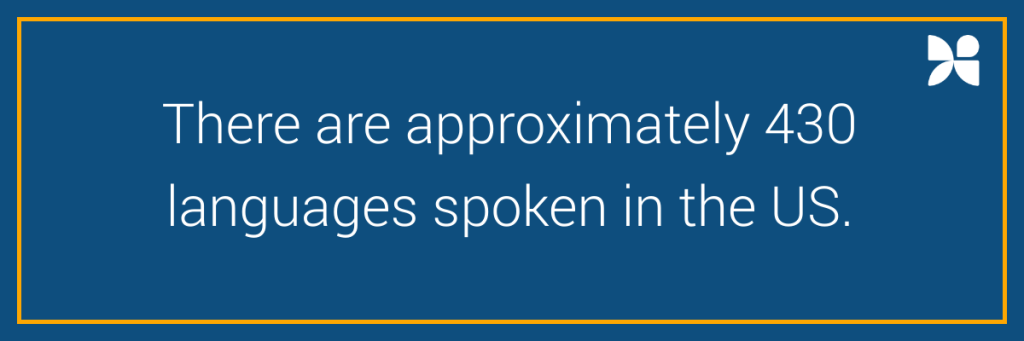
In the United States, a country known for its diversity, it comes as no surprise that there are a multitude of languages spoken from coast to coast. While English is the most commonly spoken language, according to recent data from Ethnologue sites there are approximately 430 languages spoken in the US. This includes languages spoken by the indigenous population and those brought into the country by immigrants. In this article, we will explore the top languages in the US, along with regional trends.
Top Languages in the US
According to recent data from the US Census Bureau, the top languages in the US, after English, are:
- Spanish,
- Chinese (including Cantonese and Mandarin),
- Tagalog (FIlipino),
- Vietnamese,
- and French.
These rankings have remained relatively consistent over the years, with Spanish consistently ranking as the second, most commonly spoken language in the US.
Key US Language Trends
Political instability, environmental crises, and economic challenges worldwide continue to drive immigrants and refugees to the United States – impacting the language support needed in schools, social service agencies, and the healthcare system. While the most commonly spoken languages remain Spanish or Chinese, there has been a notable surge in the number of languages originating from South Asia and the Middle East, including Hindi, Arabic, and Punjabi to name a few.
We’ve also seen a rise in Urdu, Dari, and Pashto, as refugees continue to flee Pakistan and Afghanistan given conflict in these regions. Cities including Sacramento, Houston, and Fremont have become cultural hubs for these communities due to the growing resources and support these cities offer.
The presence of Hindi and Gujarati spoken in Silicon Valley, New Jersey, and New York City, for example, also continues to grow as tech professionals and skilled workers from India come to the US for job opportunities provided in these cities.
Multilingual Learners and Education
As the US continues to grow more diverse, the importance of support for ELL and MLL students becomes more of a necessity, especially in schools.
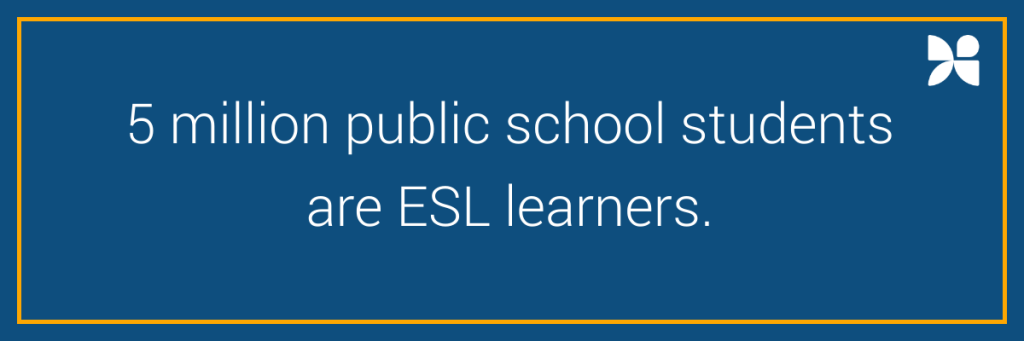
According to the National Center for Education Statistics, 10.3% of public school students are ESL (English as a Second Language) learners. This equates to 5 million students. As this number continues to rise, so does the need for language assistance programs to help ensure students are able to attain English proficiency for academic achievement.
Funding for ESL programming increased by $305 million to $1.2 billion for the 2024 fiscal year to help these students gain English proficiency, according to The 74. In addition to funding, teaching standards have been established by the Teachers of English for Speakers of Other Languages International Association (TESOL), to help empower multilingual learners and for the teachers who work with them.
The objective of supporting multilingual learners in the public school system is to eliminate language barriers, ensuring equal access to education for all. Public educational institutions have a responsibility and legal requirement to provide the essential resources to every child, regardless of their immigration status or primary language. Increasing funding and implementing teaching standards are two vital approaches that schools are adopting to meet this demand effectively.
Interpretation and Translation Services for the Top Languages in the US
To best support non-English speaking families, particularly refugees and new immigrants, social service, healthcare, and education organizations must work to make interpretation and translation services more widely available.
When organizations embrace language access and work to promote language equity, they are better able to serve an ever-increasingly diverse and inclusive society. Language should never be a barrier that hinders people from getting the support they need to communicate and access both information and services.
Alboum empowers schools, government agencies, community health centers, and community nonprofits working to support newcomers and immigrant families. We help organizations enroll kids in school, provide essential healthcare, and access local government services, housing, food, and jobs. To learn more about how Alboum’s translation and interpretation services or request a quote, contact us today.